The Bar Map
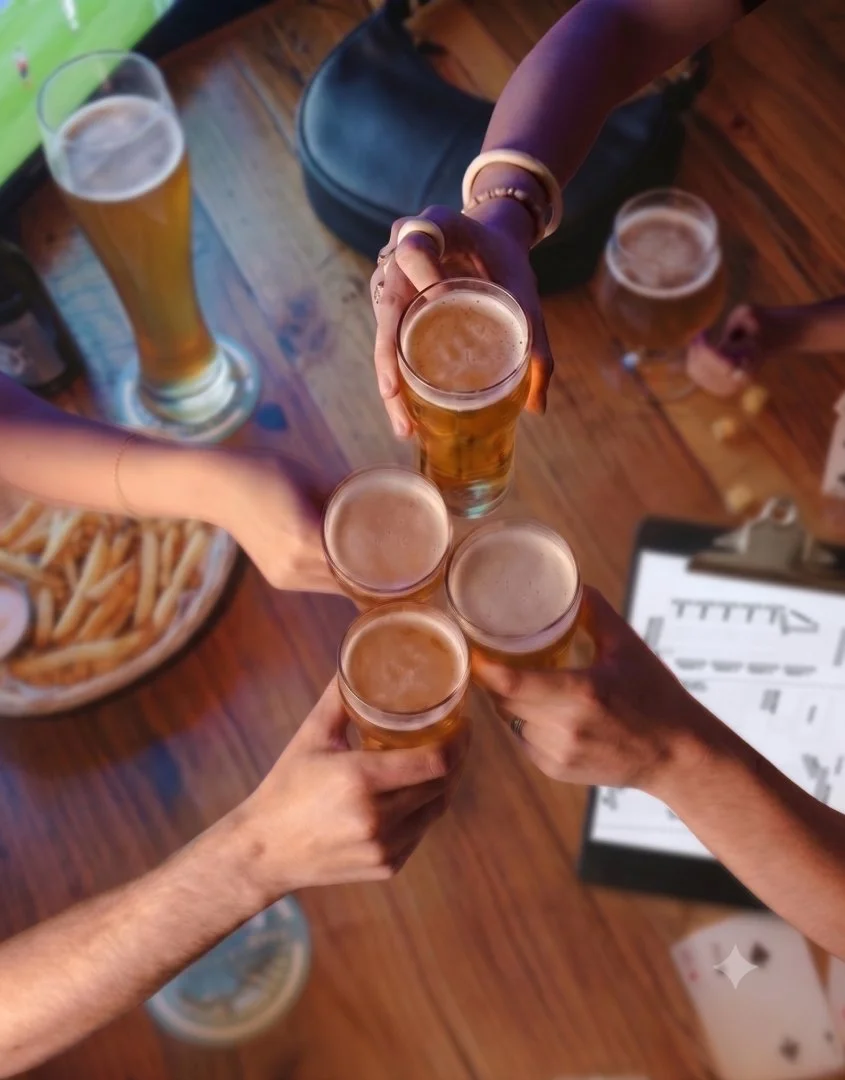
As supervisor, I saw the same problem from two sides, the front, where guests wait on reservations and staff scramble to keep the room organised; and the back, where the team needed clarity just to know what to do and when. I ended up redesigning both.
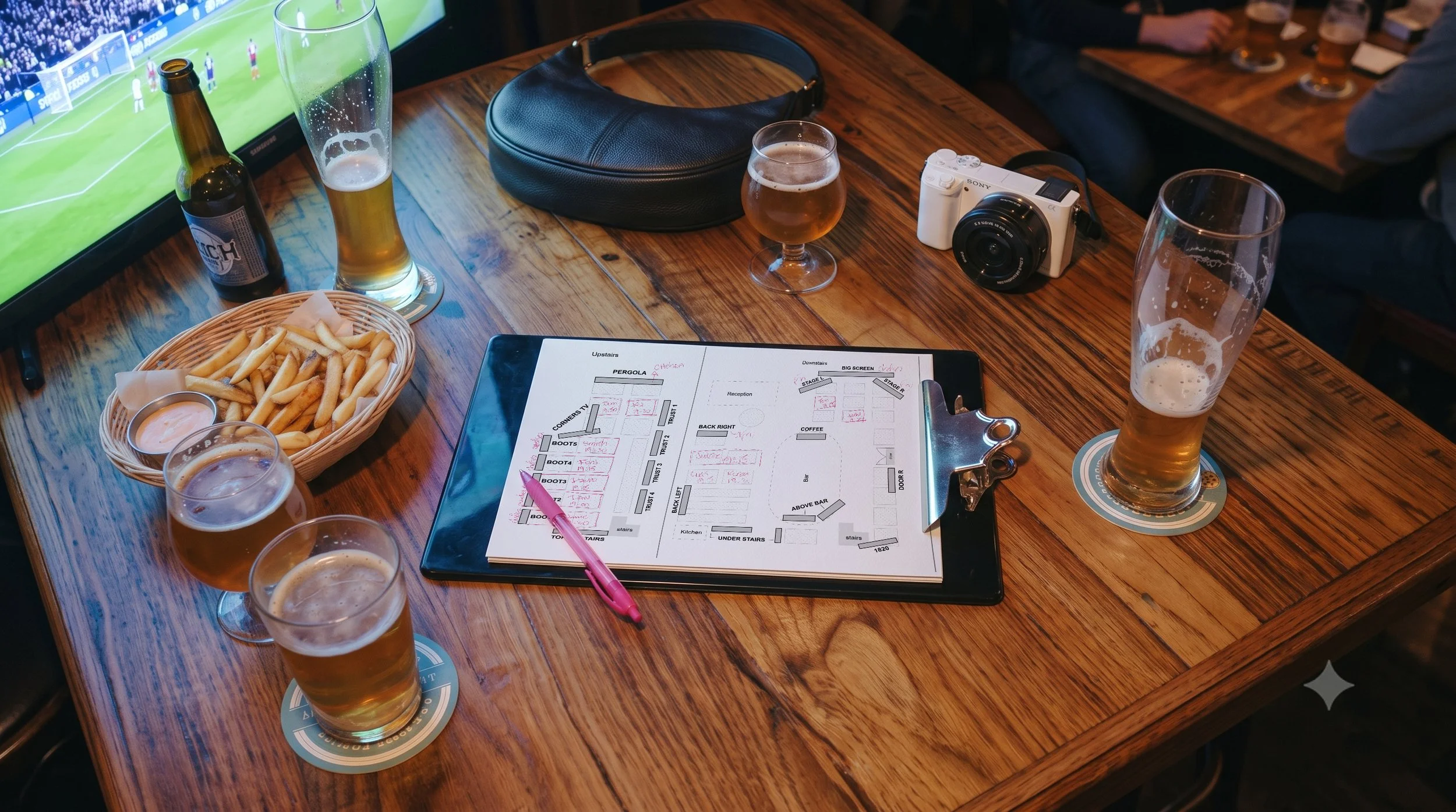
Table & Screen Maps:
Reservations were the first fix. Staff needed a fast, visual way to see the room and assign tables without guessing, so I designed a new table map system built around clarity and speed, made for the pace of a busy shift, not a quiet office.
Screens came next. A sports bar lives and dies by getting the right game on the right TV at the right time, with multiple games running at once, staff needed a system to assign what played where without confusion or lost time mid-service. I built a screen map to solve exactly that.
Signage
One small physical fix made a bigger difference than its size suggests.
The bar used fixed "Reserved" signs with no other information, no name, no detail, just a generic marker. I designed a new printable sign instead, giving staff a clear place to write the guest's name by hand for each booking, so a table could be reserved for someone at a glance instead of just marked as taken.
It wasn't a complicated fix. But it removed friction from a moment staff repeated dozens of times a shift.
Internal
Communication
The last piece was entirely internal: making sure the team always knew what was expected of them.
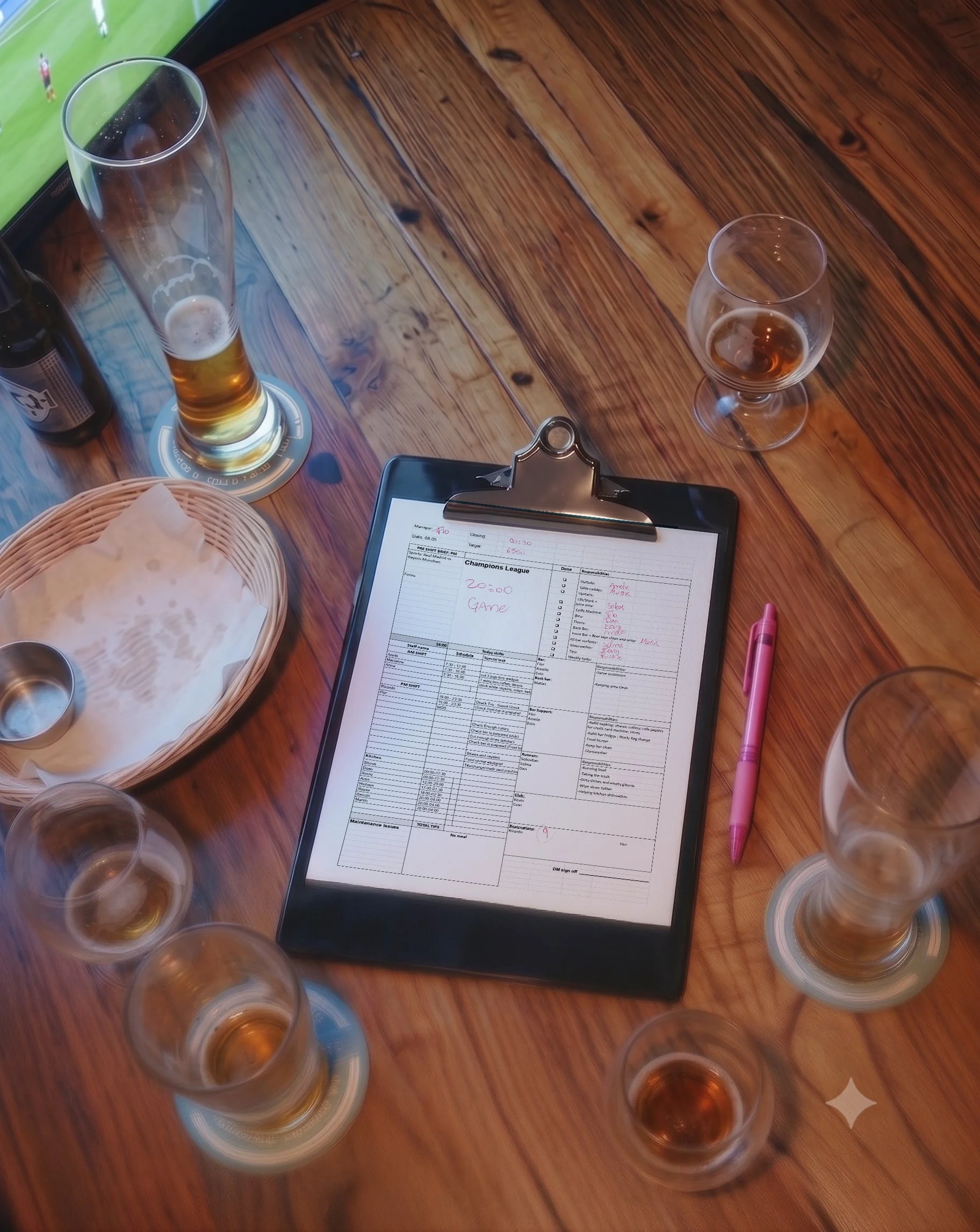
I redesigned the checklist system so staff could clearly see which tasks were assigned to them, no more asking, no more assuming. I also reworked the visual layout of the rota, making it easier to read at a glance, especially useful during a fast handover between shifts.
Results
Service got faster, complaints dropped, and the floor ran more efficiently across the board. It's the same instinct I bring to design work, less about one clever solution, more about making every part of a system work together.
Reflection
None of these fixes were complicated on their own. What mattered was seeing the whole system, reservations, screens, signage, tasks, scheduling, as connected pieces of the same experience, and redesigning each one so the next person, whether staff or guest, could move through their part without friction. It's the same instinct I bring to design work: less about one clever solution, more about making every part of the system work together.